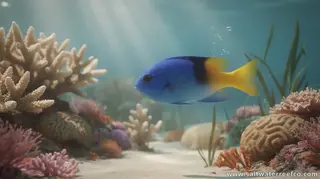
Azure damsel (Chrysiptera hemicyanea): habitat, care, and quick facts

 Azure damsel (Chrysiptera hemicyanea): habitat, care, and quick facts

The azure damsel (Chrysiptera hemicyanea) is a small marine fish native to the western Pacific Ocean, where it inhabits coral reefs and rubble zones. Adult individuals typically reach around 4 to 5 centimeters in length, making them one of the smaller members of the damselfish family. Its bright blue body and contrasting fins make it a standout in both natural reefs and home aquariums.

In the wild, chrysiptera hemicyanea favors sheltered reef slopes and lagoons with abundant live cora ... Read more »

Comments

Popular posts from this blog

Mixed Reef vs SPS-Dominant Tanks: Lighting Needs

  Mixed Reef vs SPS-Dominant Tanks: Lighting Needs Choosing between a mixed reef and an SPS-dominant system is less about “better” and more about whether you want flexibility and variety—or maximum coral growth potential with tighter control. Lighting is usually the deciding factor because SPS generally demands higher light and more stable conditions than many other reef corals. Below is a practical comparison of both approaches, with the pros and cons that matter most, plus the lighting needs reef keepers commonly p ... Read more »

Me & Velvet Sickness on the Reef: Safe Treatments

  Me & Velvet Sickness on the Reef: Safe Treatments White spots, mucus coating, rapid weight loss: When Ich or Velvet disease (velvet disease) appear in a reef aquarium, every hour counts. Both diseases are caused by parasites that infest fish – while corals and invertebrates can be affected to varying degrees depending on the treatment. Therefore, it's crucial not only to know "what helps," but also "what is demonstrably safest for the reef." The following overview categorizes the typical symptoms, explai ... Read more »

Sustainable Coral Farming: How Aquaculture Is Changing the Hobby

  Sustainable Coral Farming: How Aquaculture Is Changing the Hobby For years, coral reef hobbyists have faced a tradeoff: the desire to keep vibrant reef life at home, versus the environmental cost of extracting wild colonies. Increasingly, that equation is changing as sustainable coral farming expands—and as aquaculture becomes the industry standard for many popular species. Rather than taking corals from reefs, aquaculture nurseries grow corals in controlled systems, then supply fragments to hobbyists and retailers. The approach is gaining mo ... Read more »